Music Release Date Calculator
Music Release Date Calculator
Music Release Date Calculator
Build a release plan that actually works
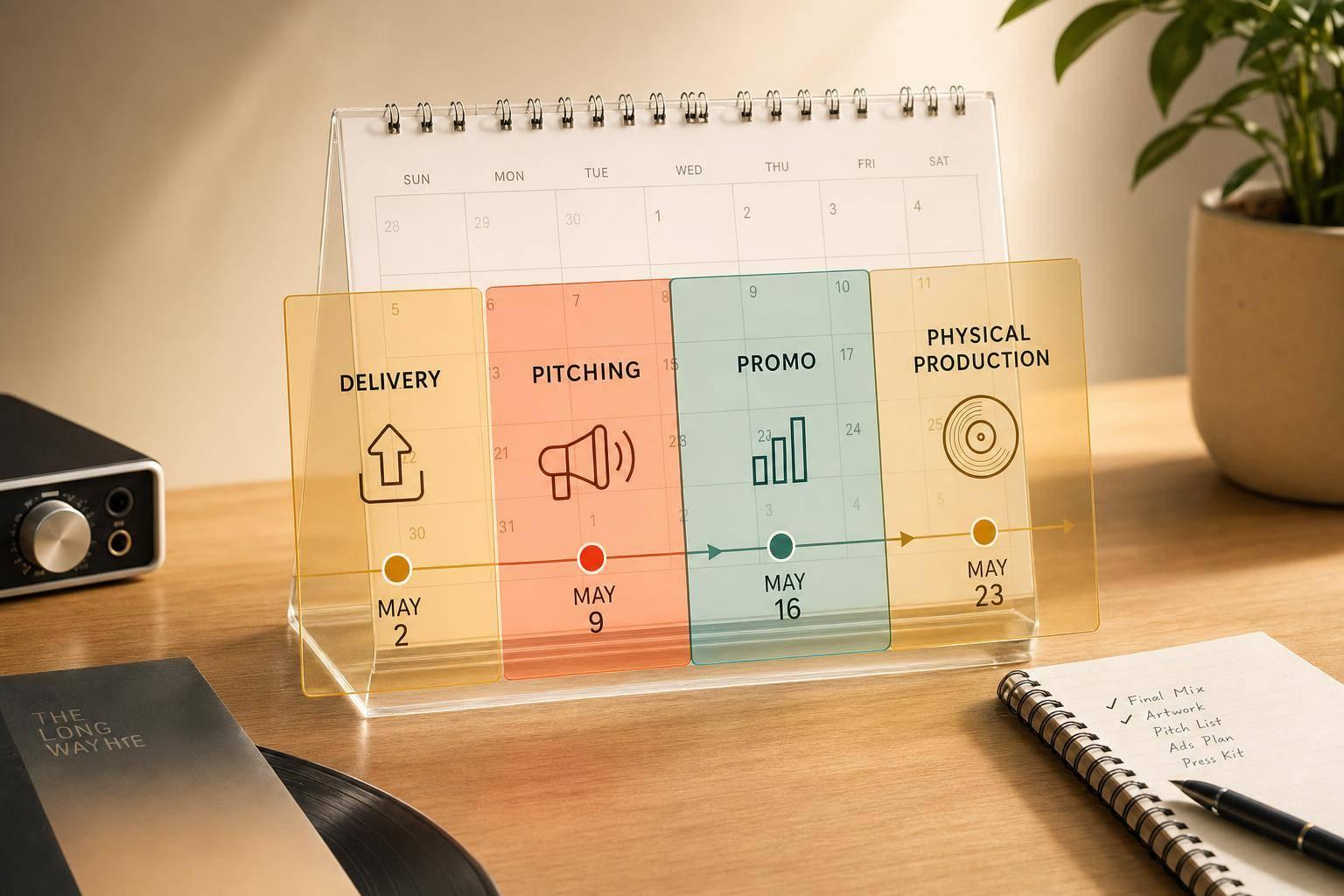
A Music Release Date Calculator helps you turn a target launch day into a practical rollout schedule. Instead of guessing when to send masters, lock artwork, pitch playlists, or start press outreach, you can map every milestone backward from release day in a way that feels organized and realistic. That matters whether you're planning a quick single drop or a longer album campaign.
What this release planning tool helps you track
The tool is built for artists, labels, and managers who need a clear timeline without getting buried in extra features. You enter your release date, choose the project type, set a standard or rushed rollout, and add physical production if needed. From there, the planner calculates key deadlines for distributor delivery, metadata, cover art, pre-save setup, pitching, promo, and teaser content.
A smarter way to schedule music marketing
A solid music release planner can help you spot problems early, especially if key dates already fall in the past or your promo window is too short. It also highlights whether your chosen date lands on a Friday, which is often the preferred day for digital releases. If you're trying to build a cleaner campaign timeline, a release schedule calculator gives you a faster way to plan with confidence.
FAQs
Why does the tool check whether my release date is on a Friday?
Friday is the standard global release day for most digital music platforms, so launching on that day usually makes scheduling cleaner and aligns with audience expectations. It can also help with playlist strategy, reporting cycles, and overall campaign coordination. That said, not every project has to come out on a Friday. If you choose another day, the tool simply flags it so you can make that decision intentionally.
What changes when I select a rushed rollout?
A rushed rollout compresses the planning window and moves key deadlines closer to the release date. That can be useful when timing matters, but it also increases the risk of missing distributor cutoffs, shortening your press window, or limiting playlist pitching opportunities. The tool reflects that by tightening milestone dates and showing warnings when the lead time becomes very short or unrealistic.
How should I use this for singles versus EPs or albums?
Singles usually work with shorter lead times, so the schedule can stay lean while still leaving room for pitching, pre-save setup, and social teasers. EPs and albums often need a broader runway because there are more assets, more metadata to manage, and usually a bigger promotional push. This tool accounts for that by using longer default windows for larger releases and by adding earlier production milestones if a physical format is part of the plan.
Ready to create your smart links?
Join thousands of artists using PromoLinks to promote their music smarter.
Get Started Free