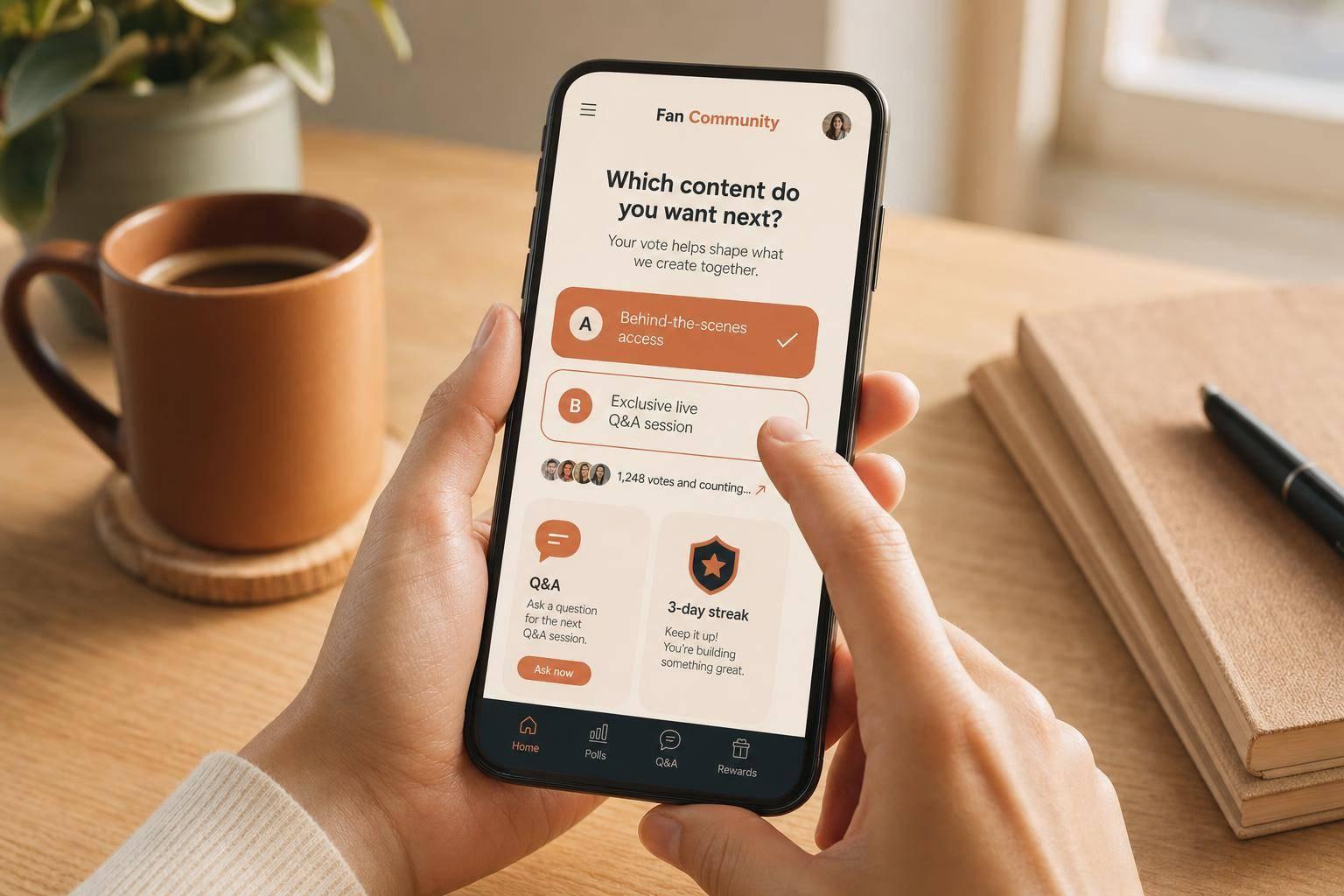
How to Use Polls and Q&A to Build Fan Loyalty
How to Use Polls and Q&A to Build Fan Loyalty
If I want more loyal fans, I don’t need more noise. I need more repeat action. The clearest signs are simple: repeat streams, saves, email opens, ticket buys, merch orders, and fans who keep showing up in polls and live chats.
Here’s the short version:
- Polls get fans to act fast
- Q&A builds trust faster than one-way posting
- Small choices work best: song picks, merch colors, setlist votes, cover songs
- A vote should lead somewhere: pre-save, capture fan emails, ticket page, or merch link
- Consistency beats volume: one poll or one live session on a set schedule is enough
- The main metric is repeat behavior, not likes or views
A few numbers help frame it:
- Email open rates above 30% can point to a healthy list
- Social engagement above 3% is a solid mark on Instagram or TikTok
- Fan loyalty shows up more in repeat actions than in one-time reach
I’d keep the plan simple: run polls only when I’m ready to use the result, host Q&A with a clear topic, close the loop by sharing what changed, and track who comes back more than once. That’s how casual listeners start turning into paying fans.
How to Design Polls That Make Fans Feel Involved
Choose the right platform and poll format
Pick the platform based on the choice you want fans to make. If the match is right, the poll feels less like filler and more like a say in what happens next.
Instagram Stories are great for fast votes people can answer in a few seconds. They also make it easy to follow up by DM with fans who show interest. YouTube Community polls are a good fit for connecting with subscribers and getting feedback on song or video ideas. X (formerly Twitter) works well for live voting during a show or a release event. Discord is better for deeper choices with your core fans, like album titles. Start with the platform that fits the decision, then build the question around it.
| Platform | Poll Features | Best Use Case for Musicians | Main Limitation |
|---|---|---|---|
| Instagram Stories | Tap-to-vote, sliders, question stickers | Quick feedback; segmenting fans for DM follow-ups | Content disappears after 24 hours |
| YouTube Community | Image and text polls | Engaging subscribers on song or video ideas | Requires an active subscriber base to see the tab |
| X (Twitter) | Simple text-based polls, up to 4 options | Live setlist votes or release-day decisions | Limited visuals; fast-moving feed |
| Discord | Bot-driven polls, emoji reactions | Important choices with your inner circle | Smaller reach; needs active moderation |
Ask questions that influence real decisions
One of the easiest ways to lose trust is to ask for input, then do nothing with it. Fans catch that fast. So only run polls when you're ready to act on the result. And keep the choices tight: two or three options you can actually pull off.
Good poll topics include:
- Choosing between two merch colorways
- Voting on which unreleased track to finish first
- Picking a cover song for a tour stop
- Deciding between release times like 7:00 PM ET vs. 8:00 PM ET
These may seem small on your end. To fans, though, they matter because the vote changes something.
When the poll ends, share the winner and say why that option makes sense. Then use that result to tee up your next fan touchpoint.
"Closing the loop turns one-time respondents into ongoing collaborators." - Orphiq
Connect poll participation to next steps
A vote shouldn't be the end of the interaction. It should lead somewhere.
Use PromoLinks.me to send voters to a pre-save page or an email signup form, then track which poll topics lead to the most sign-ups. You can also use poll results to shape your next Q&A topic. That gives you a simple read on what fans want to talk about live.
sbb-itb-e819543
How to Host Q&A Sessions That Build Trust
Polls let fans tap a button. Q&As let them speak.
That difference matters. A live Q&A builds trust fast because people hear your voice, see your face, and watch how you handle things in the moment. As Orphiq puts it:
"Music brings people in. Connection keeps them there. Q&As invert the typical artist-fan relationship. Instead of broadcasting, you respond."
Pick a Q&A format that fits your audience
Different platforms lead to different kinds of conversations. Some help you reach new people. Others are better for deeper back-and-forth.
| Platform | Discovery Potential | Conversation Depth | Moderation Needs | Ideal Use Case |
|---|---|---|---|---|
| Instagram Live | High | Medium | Low–Medium | Casual, mobile-first engagement |
| TikTok Live | Very High | Low–Medium | High | Reaching new audiences; off-the-cuff Q&A |
| YouTube Live | Medium | High | Medium | Polished sessions or song/video premieres |
| Twitch | Medium | High | High | "Studio Hours" or live creative process sessions |
| Discord (Text/Voice) | Low | Very High | User-managed | Intimate superfan hangouts and deep-dives |
If your audience is still small, start with Instagram Live. It’s simple, familiar, and easy for fans to join from their phones. When you’ve built a core group that wants more direct access, bring in Discord for closer conversations.
After you choose the platform, give the session a clear theme. Fans should know why they’re showing up, not just that you’ll be live.
Plan a clear session flow and schedule
"Generic Q&A sessions die fast. 'Ask me anything' without structure leads to awkward silence or the same five questions every time." - Chartlex
A clear theme helps right away. “Ask me about the new EP” works better than a wide-open prompt. So does something like “Studio Hours.” It gives fans a lane and makes it easier for them to come ready with good questions.
Keep the flow simple: welcome and context → pre-submitted questions → live audience questions → closing call to action. Starting with pre-submitted questions helps you avoid dead air and gets the session moving with some energy.
What matters most isn’t how often you go live. It’s whether people can count on you. One session on the second Thursday of every month at 8:00 PM ET is worth more than weekly sessions that disappear after a few weeks. Fans in other time zones will adjust once they know the pattern. Announce the session 24 hours ahead, then send a reminder 1–2 hours before you go live.
Set boundaries and use fan questions as insight
You do not need to answer every question. In fact, you shouldn’t.
Skip questions that are too personal, meant to start drama, or so narrow that only one person cares. If something is off-topic, give a short redirect instead of acting like you didn’t see it. On YouTube or Twitch, a moderator can help filter questions in real time so you can stay on track.
Also, pay attention to what keeps coming up. If fans ask again and again about one lyric, one song choice, or one production detail, that’s not random. It’s a signal. Repeated questions are free market research that helps you understand your audience. You can use that pattern to shape release plans and tour choices. Integrating these insights into your pre-release marketing checklist ensures your next launch resonates with what fans actually want.
How to Build Polls and Q&A Into Releases and Tours
Once polls and Q&As are working, use them to guide release and tour choices that fans can actually see.
A single poll here and there won't build much loyalty. The better move is to weave interaction through the whole campaign so fans can point to a result and say, I helped shape that.
Use interaction at each stage of a release
It helps to think about a release in four stages: teaser, pre-save, launch week, and post-release. Each stage gives you a natural moment to bring fans in.
In the teaser stage, ask fans to pick between two artwork options or vote on which unreleased snippet you should finish first. Then, when the poll closes, share the result and tell them how you're using it. That's the part that makes the vote feel real.
In the pre-save stage, use pre-save campaigns to give subscribers an exclusive Q&A or early song access. Simple, but effective. It gives loyal fans a reason to take action before release day.
During launch week, host a live listening party on Instagram Live or Discord. Listening parties during launch week can lead to more saves because fans get the story behind the release. When people hear the context behind a track, they feel like part of the project, not just people watching from the sidelines.
After the release, don't let the energy fade. Poll fans on their favorite track, which song should get the next music video, or which Spotify Canvas visual should rotate next based on fan-submitted content. That gives people a reason to come back to the project weeks after the drop.
Let fans shape parts of your tour plan
Fans are more likely to show up when they had a hand in deciding you'd be there.
If you're building a U.S. tour route, share 3–4 workable cities and let fans vote on the final stop. Be specific. Ask whether you'd be better off adding Nashville, TN or Austin, TX to the fall tour. Tight questions with limited options give you data you can use.
The same idea works for setlists. Poll fans on a wildcard song or encore order, then credit the voters in the caption or onstage when you play the pick. That small nod can turn a casual attendee into the person who goes and tells their friends about you.
Send all traffic to one destination
Each poll result, Q&A session, and fan vote should lead somewhere. If fans choose the new artwork, the next post should include a pre-save link. If they vote on a tour city, the announcement should include a ticket link. Interaction needs a clear next step.
PromoLinks.me lets you send poll results, Q&As, pre-saves, tickets, and merch to one smart link, with fan email capture, event pages, QR codes, and real-time analytics. You can then track which votes, Q&As, and clicks lead to repeat action.
How to Measure Fan Loyalty and Improve What Works
Polls vs. Q&A: Best Platforms & Loyalty Metrics for Musicians
Once your polls and Q&As are live, the next step is simple: figure out who keeps coming back.
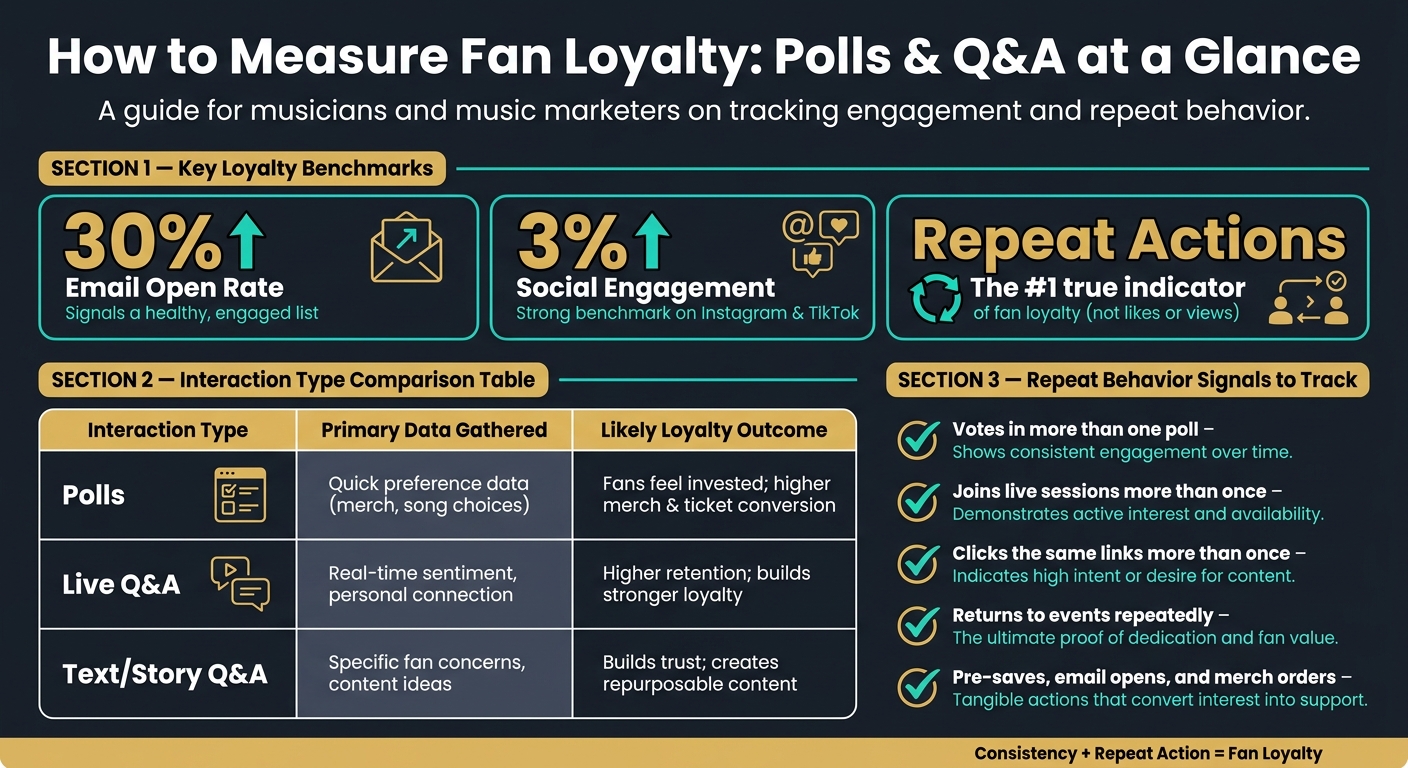
Track metrics that show repeat behavior
Views and likes can tell you how far something spread. They don't tell you much about loyalty.
What does? Repeat actions.
Look at who:
- votes in more than one poll
- joins live sessions more than once
- clicks the same smart links more than once
- comes back to events again and again
Those are the fans showing real commitment.
Save rate matters more than raw streams because it shows intent. The same idea carries over to other channels. Email open rates above 30% point to a healthy, engaged list. On Instagram or TikTok, an engagement rate above 3% is a solid benchmark for strong engagement.
Measure each format by the kind of loyalty signal it gives you:
| Interaction Type | Primary Data Gathered | Likely Loyalty Outcome |
|---|---|---|
| Polls | Quick preference data (merch, song choices) | Fans feel invested in creative decisions; higher merch and ticket conversion |
| Live Q&A | Real-time sentiment, personal connection | Higher retention; builds stronger loyalty |
| Text/Story Q&A | Specific fan concerns, content ideas | Builds trust through accessibility; creates content you can repurpose |
Use analytics to find your most engaged fans
Not every fan who votes once is loyal. A one-off click is nice, but it doesn't tell the whole story.
The fans worth spotting are the ones who keep showing up. They vote again. They ask questions. They click your links. They recognize your custom domain. They pre-save. They open your emails more than once.
Use your analytics to find those patterns. Then give those fans a bit more attention or some kind of exclusive access. That's often where you learn what people want more of.
Use those signals to decide what to repeat.
Conclusion: Keep interaction simple, consistent, and actionable
Start with a cadence you can keep up with, like one weekly poll or Q&A. Track repeat responders. Reward them with more access.
FAQs
How often should I run polls or Q&A sessions?
Consistency matters more than volume. The goal is to make your engagement feel predictable, whether that’s a weekly Q&A on social media or a monthly interactive email.
For many artists, monthly is a solid starting point. Weekly can also work, especially with low-lift formats like Stories. Tie your cadence to your posting schedule, check analytics to see what fans respond to, and go into each session with a clear plan.
What should I do if fan participation is low at first?
Low participation isn’t a dead end. It’s a chance to settle in and find your rhythm.
To get things moving, ask a few friends or family members to send in questions first. That gives you something to respond to right away, and it helps the session feel active from the start.
Stick with it. People often need a little time to learn when to show up and join in.
If turnout is still low, save the recording and turn it into short clips for future posts or emails.
How can I tell if polls and Q&As are leading to real fan loyalty?
You can see it in what people do next: buying tickets, picking up merch, and telling friends. When fans get a say in things like album artwork or tour stops, they’re often more likely to turn into active members of the community.
Pay close attention to whether your most engaged fans are also taking those steps. Platform analytics can help you track repeat participation and interactions, which can show that fans feel valued and connected.
Related Blog Posts
Ready to create your smart links?
Join thousands of artists using PromoLinks to promote their music smarter.
Get Started Free