10 Playlist Pitch Tips from Spotify Sources
If you want a Spotify editorial shot, the window closes before release day. You can only pitch one unreleased song per release, and Spotify says to send it at least 7 days early. In most cases, 2 to 4 weeks gives you more room for distributor delivery, metadata checks, and profile cleanup.
Here’s the short version: I’d treat Spotify pitching like a pre-release checklist, not a last-minute form. The pitch works best when the song is unreleased, the tags match the audio, the note is short, and every field is clean.
- Pitch unreleased tracks only
- Submit 7+ days before release
- Pick one lead song
- Use exact genre and mood tags
- Write a short note with clear context
- Update your artist profile first
- Check titles, ISRCs, UPCs, names, and release date
Spotify editors don’t judge the song in a vacuum. They also look at details like genre, mood, energy, sound, and release context. That means a strong track can still miss if the pitch is late or the metadata is off.
How To Write Spotify For Artists Pitch (That ACTUALLY Gets Playlists)
sbb-itb-e819543
Quick Comparison
| Area | What to do | What hurts your pitch |
|---|---|---|
| Timing | Send it 2 to 4 weeks before release | Sending it under 7 days before release |
| Song choice | Pick one clear lead track | Pitching the wrong song from the release |
| Tags | Use specific subgenres and matching moods | Using broad or off-base tags |
| Pitch note | Keep it short, direct, and useful | Filling it with hype or vague lines |
| Profile | Update bio, photos, and links | Leaving your profile half-finished |
| Metadata | Check names, codes, and release date | Typos and mismatched details |
I’d sum it up this way: good pitching starts with a music marketing checklist before the music goes live. This piece walks through the 10 inputs that matter most so you can send a cleaner pitch and avoid easy mistakes.
10 playlist pitch tips from Spotify sources
Use this checklist to tighten your submission as part of your music promotion across platforms before you send it.
1. Pitch only unreleased tracks
Only pitch unreleased tracks in Spotify for Artists.
2. Submit at least 7 days before release
Spotify says pitches need to be submitted at least 7 days before release. In practice, it helps to aim for 2 to 4 weeks early. That gives your distributor time to process the release so the track is ready for review.
3. Pick one strong lead song
You can only pitch one song per release. So don’t split your focus. Choose the track with the best playlist fit.
4. Use specific genre tags
Use precise genre and subgenre tags. Broad tags can make it harder to place the song in the right lane.
5. Pick mood, energy, and sound details that match the track
Choose mood, energy, and sound details that actually fit the song. If the tags don’t match what editors hear, the pitch gets weaker fast.
6. Add context that helps with playlist placement
Include context that helps editors place the track. Think in terms of fit, not filler.
7. Keep the pitch note short and on point
Keep the pitch note short and focused. Stick to the sound, mood, and playlist fit.
8. Update your artist profile before pitching
Complete your artist profile before you submit. It’s a simple step, but it helps present the release clearly.
9. Plan release timing around distributor delivery and pre-release setup
Use music promotion tools and leave enough time for distributor delivery so the track shows up in Spotify for Artists before the pitch deadline.
Treat the final review as a last pass for avoidable errors.
10. Check every field before you submit
Before you submit, review the release date, song selection, and genre tags. Small mistakes can sink an otherwise strong pitch.
Quick reference table: strong pitch inputs vs. common mistakes
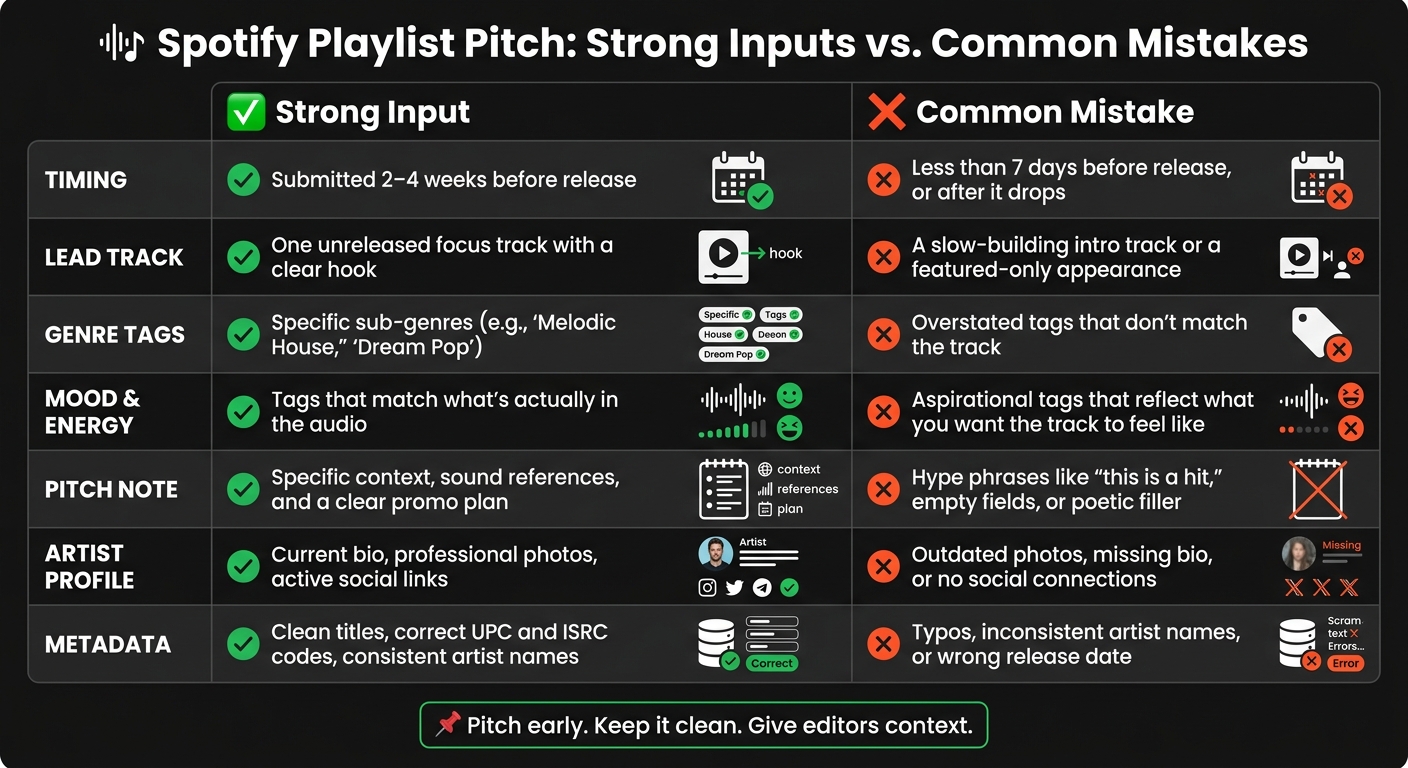
Spotify Playlist Pitch: Strong Inputs vs. Common Mistakes
Most reviewed pitches fall apart over small, fixable details. The tips above set the rules. This table is your last-pass check before you hit submit.
| Pitch Field | Strong Input | Common Mistake |
|---|---|---|
| Timing | Submitted 2–4 weeks before release | Less than 7 days before release, or after it drops |
| Lead Track | One unreleased focus track with a clear hook | A slow-building intro track, or a featured-only appearance |
| Genre Tags | Specific sub-genres (e.g., "Melodic House", "Dream Pop") | Overstated tags that don't match the track |
| Mood & Energy | Tags that match what's actually in the audio | Aspirational tags that reflect what you want the track to feel like |
| Pitch Note | specific context, sound references, and a clear promo plan | Empty field, hype phrases like "this is a hit", or poetic filler |
| Artist Profile | Current bio, professional photos, active social links | Outdated photos, missing bio, or no social connections |
| Metadata | Clean titles, correct UPC and ISRC codes, and consistent artist names | Typos, inconsistent artist names, or wrong release date |
A pitch can look strong on the surface and still get dragged down by metadata mistakes. Double-check artist names, track titles, ISRCs, UPCs, and the release date before submission. To maximize impact, consider pre-save strategies to build momentum alongside your pitch.
Conclusion: The pitch is won before release day
By release day, the pitch should already be in. Spotify editorial pitching is for unreleased music only. Once a song goes live, that chance is gone.
Most misses don’t happen because the track isn’t good enough. They happen because the timing is late, the notes are too vague, or the profile still looks half-finished. Even a strong song can miss if the note is unclear, the profile is out of date, or the pitch goes in less than 7 days before release.
Key takeaways
The checklist comes down to one simple rule: pitch early, keep things clean, and give editors enough context to know where the track fits. That means pitching one unreleased lead track, using accurate genre and mood tags, keeping the note short and specific, updating your artist branding, and sending the pitch at least 7 days before release. 2 to 4 weeks is better. You also need to leave time for distributor delivery and editorial review.
That work needs to happen before release day, not after it.
FAQs
What if my song reaches Spotify under 7 days before release?
If you pitch your song to Spotify less than 7 days before release, it will likely miss your followers’ Release Radar playlists.
You can still submit a pitch before the release date. But that 7-day window matters. Your release also needs to be processed and show up in Spotify for Artists first, so it’s smart to finalize distribution early.
How do I choose the best lead track to pitch?
Since you can pitch only one track per release, pick the song with the best shot at connecting with listeners. Look for a clear hook, polished production, and a length that doesn’t overstay its welcome.
A simple rule of thumb: choose the track that shows its vibe and identity within the first 20 seconds. In your pitch, zoom in on the song’s specific mood, instrumentation, and sound.
What should I write in a Spotify pitch note?
Give concrete details about the song so people understand what it is and where it came from.
Include:
- The story behind the track: what happened, what idea sparked it, or what moment led you to write it
- Who made it: songwriter, producer, featured artists, band members, or studio team
- Why it was written: the emotion, event, or message at the center of the song
- Genre and mood: for example, indie rock, alt-pop, acoustic folk, dark R&B, upbeat dance, or slow and reflective
Then get into the sound. Mention the instrumentation and standout details, such as:
- acoustic guitar, synths, piano, live drums, 808s, strings, or layered vocals
- any unusual touches, like field recordings, a beat switch, a stripped-back intro, or a key change
- what the song feels like sonically: warm, gritty, spacious, punchy, lo-fi, or cinematic
You should also spell out your release and promotion plans. Be specific:
- release date or release window
- whether it's a single, part of an EP, or tied to an album rollout
- plans for pre-save campaigns, social clips, live shows, radio pitching, playlist pitching, press outreach, or a music video
Skip empty lines and vague filler like “this is my best song.” Use facts that help someone picture the song and how you plan to put it out.
Related Blog Posts
Ready to create your smart links?
Join thousands of artists using PromoLinks to promote their music smarter.
Get Started Free