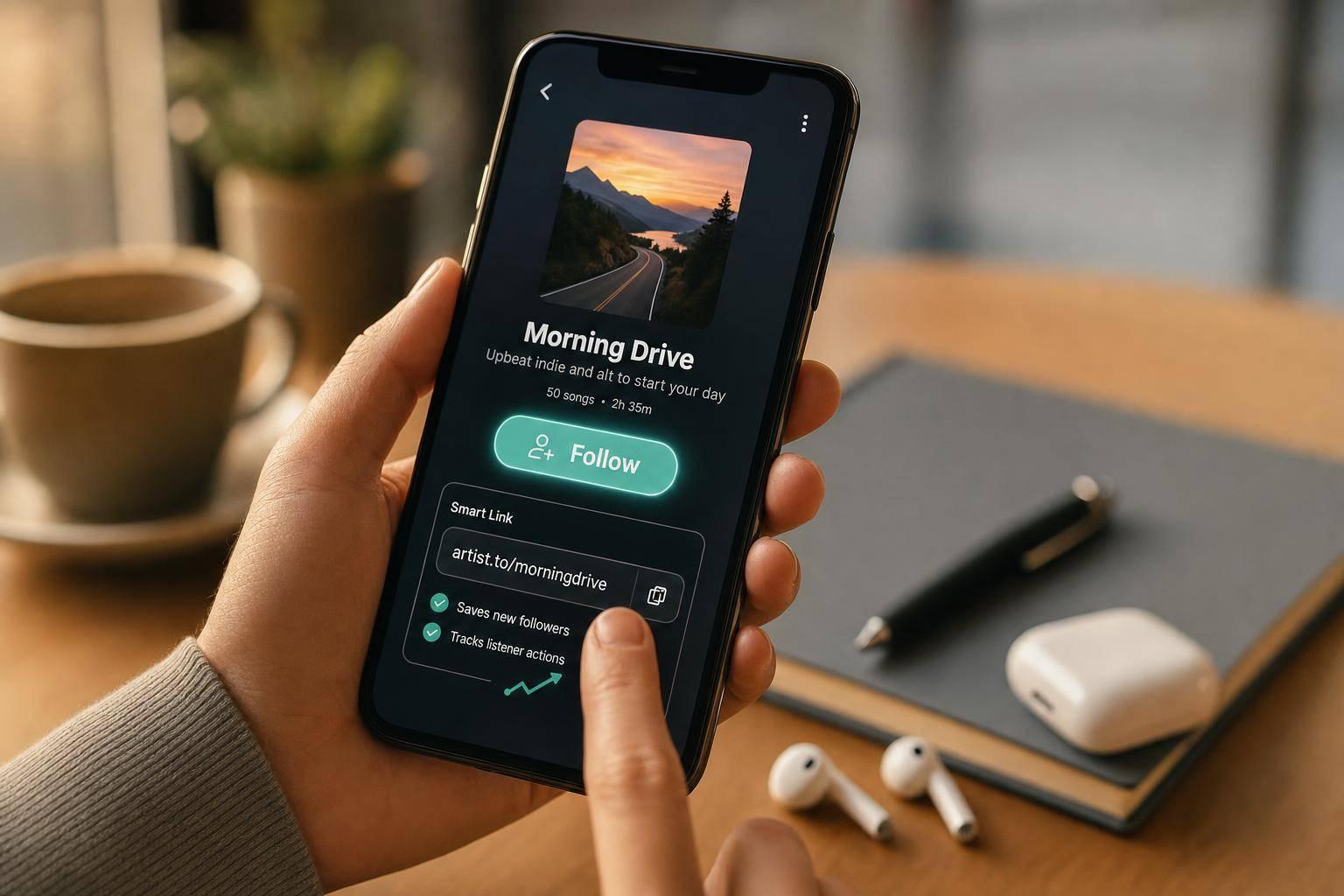
How to Turn Playlist Listeners Into Repeat Fans
A playlist stream means little if the listener never comes back. I turn more first-time listeners into repeat fans by giving them one clear next step: follow, save, subscribe, or join my email list.
Here’s the short version:
- I treat playlists as the start, not the win.
- I make my Spotify, Apple Music, and YouTube pages point to one next action.
- I use a smart link so listeners can find the right platform fast.
- I ask for one action at a time, not five at once.
- I track save rate, follower growth, subscriber growth, email signups, and repeat plays.
- I use email because it’s a channel I control, and it can drive streams, merch sales, and ticket sales more steadily than social reach alone.
A few numbers stand out:
- On Spotify, a 3%+ save rate is solid, and 5%+ is strong.
- Spotify followers are 3x more likely to stream again in the next six months.
- Small funnel changes can move results, like going from 25 to 45 saves per 1,000 streams or 40 to 120 email signups per campaign.
If I want playlist traffic to matter, I need a simple path: hear the song, visit the profile, take one action, come back for the next release. That’s the whole idea of this guide.
What matters most: don’t send new listeners into a dead end. Give them one place to go next, then measure what brings them back.
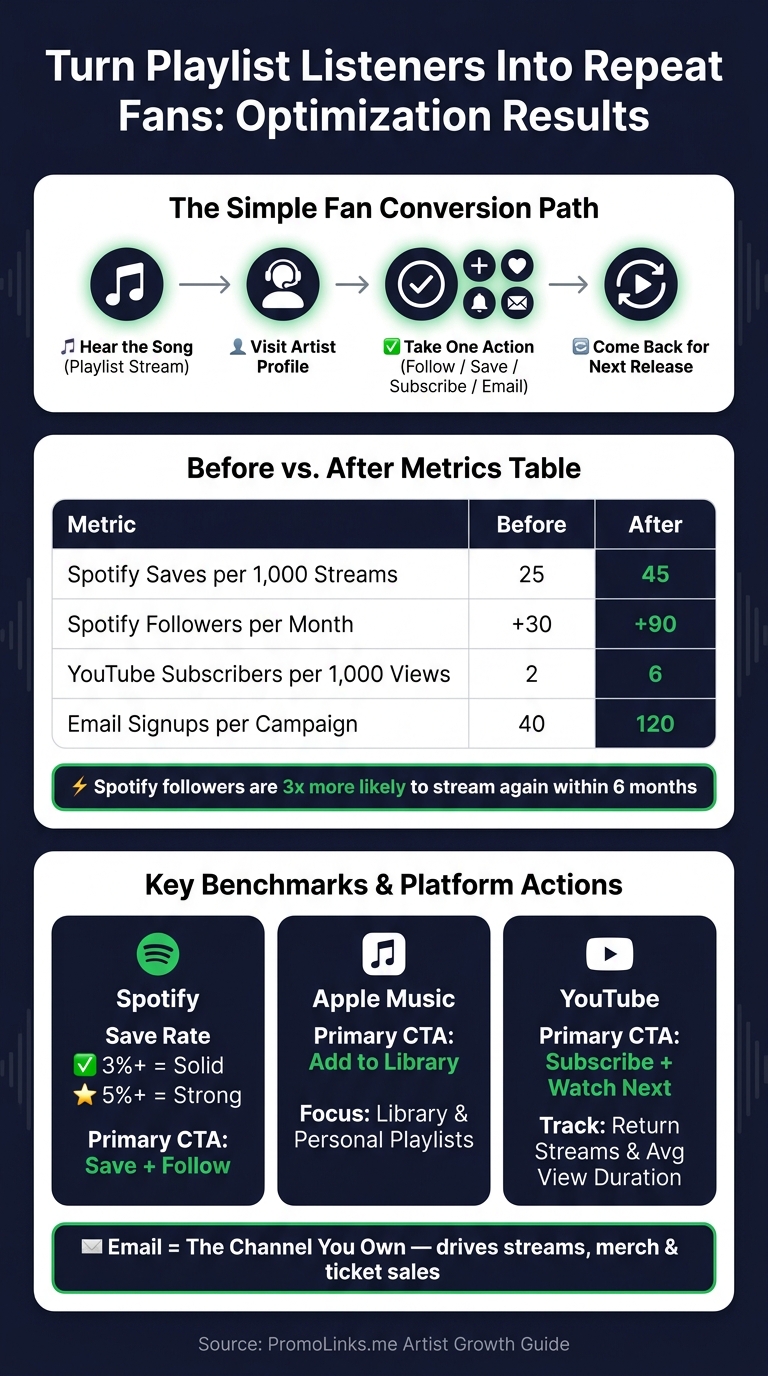
Playlist Listener Funnel: Before vs. After Optimization Results
1. Set up your artist profiles to catch playlist traffic
When someone taps your artist name from a playlist, your profile has to do two jobs right away: show who you are and show what to do next. This is the Interest stage. The goal is simple: turn that profile visit into a follow, save, subscribe, or email signup.
Optimize your Spotify, Apple Music, and YouTube profiles for next actions
On Spotify, the Artist Pick is the most visible spot at the top of your profile. Use it for a "Start Here" playlist or your current single, with a short caption like "New here? Start here." Keep your bio tight. Lead with your sound and your latest release, and use @tags for key tracks or playlists.
On Apple Music, accurate credits, time-synced lyrics, and a featured release help build trust fast. Add time-synced lyrics. Then make sure your most representative release sits front and center, so a first-time visitor knows where to begin and can add it to their library or follow your profile.
On YouTube, shape your channel around clear playlists like "Official Music Videos", "Live & Acoustic," or "Start Here: Essentials," and place them near the top of your channel layout. Put your CTA in the first two lines of every description, before "Show more." A simple line like "New here? Watch this playlist next" plus a subscribe prompt can help turn a one-time viewer into someone who comes back.
Use the same press photo or logo across Spotify, Apple Music, and YouTube so listeners can spot the same artist on every profile. When the visuals match, it becomes much easier for people to connect that playlist stream with the rest of your catalog. This consistency is a key part of a music marketing checklist to ensure your brand is ready for new traffic.
Answer one question on your artist page: what should a new listener do next?
Every profile should answer one thing with zero confusion: what should I play or do next? Pick one entry point, like a "Start Here" playlist, your latest EP, or a highlight video, and make it the most visible item on the page.
Then give each profile one main action:
- Follow
- Save
- Subscribe
- Email signup
Everything else should stay in the background.
Put outbound links last, after the main action.
Once the profile is clear, route that traffic to a single next step with a smart link.
sbb-itb-e819543
2. Build a smart link path from streams to owned channels
Use a smart link to send playlist traffic to the right next step. A smart link is one URL that sends listeners to the right streaming platform on its own, so the same link can work for Spotify, Apple Music, YouTube, and more.
Use one smart link per release or campaign
Create one smart link for each release or campaign. This keeps your analytics clean, which makes it easier to see how many people clicked and which source sent the most traffic. Keep the page fast, mobile-first, and centered on the stream. Put platform links at the top, then place secondary actions like an email signup or merch lower on the page.
Once that link structure is in place, you can add tools that catch interest before it disappears.
Use PromoLinks.me for smart links, artist pages, and email capture
PromoLinks.me fits this setup well. Enter one streaming URL to generate platform links for Spotify, Apple Music, YouTube Music, and more. If you want email capture, turn on a signup field on the landing page or use an email gate that asks for an address to unlock exclusive content. The analytics dashboard tracks page views, clicks, referrer sources, and device types in real time.
Use this funnel when you want broad reach and cleaner tracking.
Direct streaming links vs. smart-link funnels: when to use each
A direct platform link makes sense for platform-specific ads or direct messages to known users. But for anything shared more broadly - like a bio link, a social post, an email newsletter, or a QR code on a flyer - a smart-link funnel gives you more reach and better data.
| Approach | Advantages | Limitations | Best use case |
|---|---|---|---|
| Direct streaming link | Zero intermediate steps; immediate play if the listener has the app | Loses listeners on other platforms; no email capture; limited analytics | Platform-specific ads or direct messages to known users |
| Smart-link funnel | Routes all platforms; captures emails; tracks clicks and referrers | Adds one tap before the music starts | Bio links, social posts, QR codes, and cross-platform posts |
Use smart links when you want reach, tracking, and email capture in one path.
Next, match that path to one clear action: follow, save, subscribe, or email.
3. Ask for the right action: follow, save, subscribe, or email
Once your smart link is live, the next step is pretty simple: what should a new listener do next? The answer depends on both the platform and where that listener is in the journey. Match the ask to the platform, and stick to one action at a time.
Match your call to action to each platform
Each platform has a built-in action that matters most if you want a one-time listener to come back.
On Spotify, put the focus on Save and Follow. A save puts the track in the listener's library, and a follow helps future releases show up for them on their own. For example: Save this to your late-night playlist.
On Apple Music, the main ask is Add to Library. Apple Music leans heavily on the user's library and personal playlists. For example: Add this EP to your Library to revisit the full story.
On YouTube, the top actions are Subscribe and watching the next video. It helps to pair the subscribe prompt with a spoken CTA near the end of the video, then link to one hand-picked playlist in the description.
Across all three platforms, the rule is the same: one prompt per moment. If you stack too many asks into one line, people are less likely to do any of them.
Capture email addresses while listener interest is high
Follows and saves matter, but they're still tied to platform feeds and playlist churn. Email works differently. It's a channel you control, and a platform can't strip it from you.
The best time to ask for an email is right after a listener shows intent. Clicking shareable music links from a playlist is one of those moments. Keep the form short - just first name and email. Then give people a clear reason to sign up, with something they can use right away. That could be early access to the next single, a pre-save campaign for an upcoming release, an exclusive live session, or U.S. tour date alerts before tickets go on sale.
Place the short form after the stream, so the listener's first move is still to play the music.
If someone wants more, a link gate can open bonus content - like a private YouTube playlist or an acoustic version - in exchange for an email address, without getting in the way of casual listeners who just want the main track.
Assign one conversion goal to each listener stage
Use one conversion goal for each listener stage.
| Stage | Platform | Primary Call to Action | Supporting Asset |
|---|---|---|---|
| Discovery | Spotify / Apple Music | Save / Add to Library | Canvas video (Spotify), release description, or playlist description |
| Interest | Spotify | Follow artist | Profile banner and bio with a simple next step |
| Interest | Apple Music | Add to Library | Artist page bio and release notes |
| Interest | YouTube | Subscribe | End screen subscribe button and spoken CTA |
| Connection | Smart link / PromoLinks.me page | Join email list | Short form with a specific offer, like early access or U.S. tour updates |
| Retention | Spotify / Apple Music / YouTube + email | Repeat play | Artist-curated playlist or email campaign linking to a new release or show |
Once a listener takes one step, give them one next play and track whether they come back.
4. Create post-listen actions and track what brings fans back
Give new listeners a next play, not a dead end
Playlist listeners usually need one more step before they stick around. If the stream ends and there’s nowhere clear to go, they leave. So after that first listen, give them one next play.
Keep it simple on each platform. Send people to a Spotify "Start Here" playlist, an Apple Music "Essentials" playlist, or a YouTube series playlist. You can also use behind-the-scenes clips, live versions, or acoustic sessions as the next move. On YouTube, end screens and cards should send people to one specific next video, not a broad channel page.
After you set that next play, watch what happens next. The point isn’t just to get the first stream. It’s to see if listeners come back.
Track saves, followers, email signups, and repeat streams
Track what to monitor and why for each next-play path so you can keep the ones that bring people back.
Check a small set of metrics once a month in Spotify for Artists, Apple Music for Artists, YouTube Analytics, and your smart-link reports. Those numbers help you tell whether playlist traffic is turning into repeat attention.
On Spotify, pay close attention to your save rate (saves ÷ streams). 3%+ is solid, and 5%+ is strong. Also look at follower growth month over month. Once someone follows you, they’re 3x more likely to stream in the next six months.
On YouTube, focus on:
- Return streams
- Subscribers gained per video
- Average view duration
If more viewers are coming back, your post-listen series is doing its job. In PromoLinks.me, check click-through rates for each button and email form conversion rates after every campaign. That shows which next-play options and layouts are getting people to act.
Use those numbers to decide what to trim or tighten next.
Conclusion: Build a simple conversion path and improve it over time
The goal isn’t just more streams. It’s more listeners who come back, follow, and join a channel you own. Playlist exposure gets you in the room. The conversion path keeps people there.
Here’s a simple before-and-after snapshot of what this can look like when you apply these steps again and again:
| Metric | Before optimization | After optimization | Why it matters |
|---|---|---|---|
| Spotify saves per 1,000 streams | 25 | 45 | More saves signal stronger listener intent and more repeat interest |
| Spotify followers per month | +30 | +90 | Followers are 3x more likely to stream your music in the next six months |
| YouTube subscribers per 1,000 views | 2 | 6 | A higher subscription rate means your post-video calls to action and playlists are keeping viewers around |
| Email signups per campaign | 40 | 120 | Email is an owned channel, so you can keep reaching listeners directly |
Review a table like this after each release. If saves stay flat, simplify the next-play path. If email signups are low, sharpen the offer. Small changes, made steadily, can turn casual playlist listeners into fans who come back.
FAQs
What should my main CTA be?
Your main call to action should be short, direct, and tied to your campaign goal, like Listen, Play, Pre-save, or Download.
Place the main button above the fold so mobile visitors see it right away. Keep the page focused and don't overload people with choices; 3 to 5 options usually work best.
When should I ask for an email signup?
Ask for an email signup when you want to turn casual listeners into direct contacts, especially with a Link Gate.
This works best when people get something back. That could be early access, exclusive content, behind-the-scenes footage, or discount codes. You can add email capture to your artist page, smart links, or as part of a pre-save campaign.
How long should I test a funnel before changing it?
Keep a close eye on funnel performance and check progress every month. If the numbers point to a problem, act on it right away instead of waiting for a fixed test window to end.
If your pre-save page conversion rate falls below 10%, or your social reach climbs while streams stay flat, make changes. Update the design, tighten the messaging, improve your calls to action, or add audio previews to your smart link.
Related Blog Posts
Ready to create your smart links?
Join thousands of artists using PromoLinks to promote their music smarter.
Get Started Free